
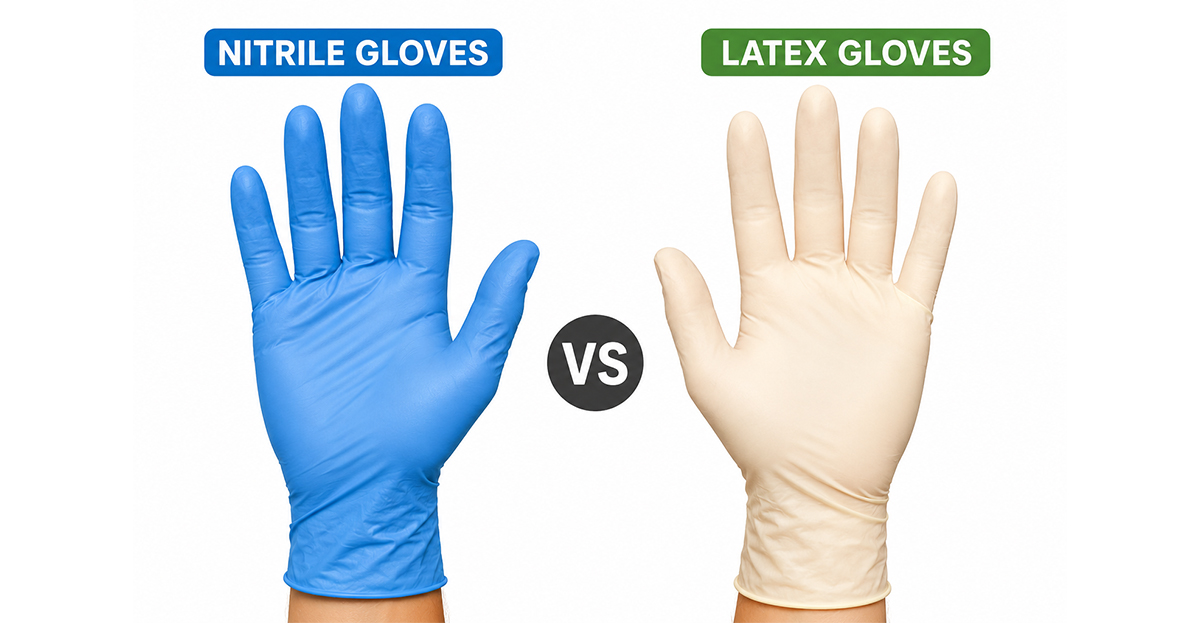
Choosing the right examination gloves is essential for maintaining workplace safety, hygiene, and regulatory compliance. Whether you work in healthcare, food processing, laboratories, cleaning services, manufacturing, or industrial environments, choosing between nitrile and latex gloves can significantly affect worker protection and comfort.
Both glove types are widely used across Kenya and globally, but each has unique advantages and limitations. Understanding these differences can help businesses make informed purchasing decisions while ensuring the safety of employees and customers.
In this guide, we’ll compare nitrile gloves vs. latex gloves, their benefits, applications, costs, and the best industries for each type.
What Are Nitrile Gloves?
Nitrile gloves are synthetic rubber gloves designed to provide superior protection against chemicals, punctures, and contaminants. They are widely used as an alternative to natural latex gloves, especially in workplaces where latex allergies are a concern.
Key Features of Nitrile Gloves
- Latex-free material
- Excellent puncture resistance
- High chemical resistance
- Comfortable fit
- Strong durability
- Suitable for prolonged use
Nitrile gloves are commonly used in hospitals, laboratories, pharmaceutical companies, automotive workshops, and industrial facilities.
What Are Latex Gloves?
Latex gloves are manufactured from natural rubber latex and have been used in healthcare for decades. They offer exceptional flexibility, comfort, and tactile sensitivity, making them ideal for tasks requiring precision.
Key Features of Latex Gloves
- Natural rubber material
- Excellent elasticity
- Superior comfort
- High tactile sensitivity
- Secure fit
- Biodegradable material
Latex gloves remain popular in healthcare facilities, dental clinics, and laboratories where fine motor skills are important.
Nitrile Gloves vs Latex Gloves: Key Differences
| Feature | Nitrile Gloves | Latex Gloves |
|---|---|---|
| Material | Synthetic Rubber | Natural Rubber |
| Allergy Risk | None | Possible Latex Allergies |
| Chemical Resistance | Excellent | Moderate |
| Puncture Resistance | Excellent | Good |
| Comfort | Very Good | Excellent |
| Flexibility | High | Superior |
| Durability | Excellent | Good |
| Cost | Slightly Higher | Generally Lower |
| Medical Use | Excellent | Excellent |
| Industrial Use | Excellent | Moderate |
Why Many Businesses Are Switching to Nitrile Gloves
Over the past few years, nitrile gloves have become the preferred choice in many industries due to their versatility and safety benefits.
1. No Latex Allergy Concerns
One of the biggest advantages of nitrile gloves is that they are completely latex-free. This eliminates the risk of allergic reactions among workers and patients.
2. Better Chemical Protection
Nitrile gloves offer superior resistance to oils, solvents, fuels, and many industrial chemicals.
3. Higher Puncture Resistance
Compared to latex gloves, nitrile gloves are more resistant to tears and punctures, making them ideal for high-risk environments.
4. Longer Wear Life
Workers performing extended tasks often prefer nitrile gloves because they maintain their integrity longer.
Why Some Professionals Still Prefer Latex Gloves
Despite the popularity of nitrile gloves, latex gloves continue to have several advantages.
Exceptional Comfort
Latex naturally conforms to the shape of the hand, providing unmatched comfort during long procedures.
Superior Tactile Sensitivity
Healthcare professionals often appreciate the precise touch sensitivity offered by latex gloves.
Cost-Effective for Certain Applications
For organizations managing large glove inventories, latex gloves can sometimes offer a lower upfront cost.
Best Industries for Nitrile Gloves
Nitrile gloves are highly recommended for:
Healthcare Facilities
- Hospitals
- Clinics
- Laboratories
- Dental practices
Industrial Workplaces
- Manufacturing plants
- Automotive workshops
- Chemical processing facilities
Food Processing
- Food manufacturing
- Catering services
- Restaurants
Cleaning and Sanitation
- Janitorial services
- Facility management
- Disinfection teams
Best Industries for Latex Gloves
Latex gloves remain a strong choice for
- Medical examinations
- Surgical environments
- Dental procedures
- Laboratory testing
- Veterinary clinics
However, facilities should always assess allergy risks before selecting latex products.
Which Glove Offers Better Protection?
When comparing nitrile gloves vs. latex gloves purely from a protection standpoint, nitrile gloves generally offer greater resistance to:
- Punctures
- Chemicals
- Oils
- Solvents
- Abrasive materials
For high-risk industrial applications, nitrile gloves are typically the preferred option.
Cost Comparison: Nitrile vs Latex Gloves
While nitrile gloves may have a slightly higher purchase price, their durability often reduces replacement frequency.
Businesses should evaluate the following:
- Usage volume
- Risk exposure
- Allergy concerns
- Required durability
The total cost of ownership may favor nitrile gloves in demanding environments.
How to Choose the Right Examination Gloves
Consider the following questions:
Are workers exposed to chemicals?
Choose nitrile gloves.
Is maximum touch sensitivity required?
Consider latex gloves.
Do employees have latex allergies?
Choose nitrile gloves.
Are gloves used for food handling?
Both nitrile and latex may be suitable depending on requirements.
Is durability a priority?
Nitrile gloves are generally the better choice.
Frequently Asked Questions
Are nitrile gloves safer than latex gloves?
Nitrile gloves are often considered safer because they eliminate latex allergy risks while providing excellent chemical and puncture resistance.
Which gloves are better for healthcare workers?
Which gloves are better for healthcare workers? Both options are widely used, but many healthcare facilities now prefer nitrile gloves due to allergy concerns.
Can nitrile gloves be used for food handling?
Yes. Nitrile gloves are commonly used in food preparation and food processing environments.
Are latex gloves biodegradable?
Yes. Latex gloves are made from natural rubber and are generally more biodegradable than synthetic alternatives.
Which gloves last longer?
Nitrile gloves typically offer greater durability and puncture resistance.
Are nitrile gloves more expensive?
Generally, yes. However, their durability often provides better long-term value.
Conclusion
When comparing nitrile gloves vs. latex gloves, there is no one-size-fits-all solution. The best choice depends on your workplace environment, safety requirements, and employee needs.
For organizations prioritizing chemical resistance, puncture protection, and allergy-free protection, nitrile gloves are usually the preferred option. For tasks requiring exceptional flexibility and tactile sensitivity, latex gloves remain an excellent choice.
Businesses across Kenya are increasingly choosing nitrile examination gloves because they offer superior protection, versatility, and compliance with modern workplace safety requirements.
If you’re looking for high-quality nitrile gloves, latex gloves, examination gloves, and other PPE products in Kenya, Safety Hub offers a wide range of solutions for healthcare, industrial, food processing, and commercial applications.